
Designing a digital health platform for clinical scheduling
Project developed for a client • App • Research • Workshops • Interviews • Ideation • Prototype
THE PROJECT
THE PROBLEM
We worked on the redesign of the digital scheduling experience for a women's health platform,
The goal was to reduce workflow complexity for the staff and to enable patients the possibility of independent managing of appointments and direct access to results through a more centralized digital interface.
Staff relied on fragmented and manual systems to schedule patient exams, which resulted in operational delays and frequent rescheduling.
Patients hesitated to schedule appointments online due to limitations in the system, which requires human intervention from staff to complete the process, and does not allow direct sharing with the doctor, compromising efficiency and tarnishing the user experience.
Role: Product Designer • Team: 3 Designers - PM - Engineers - Stakeholders
OVERVIEW
A women's health platform was losing patients to scheduling friction, as staff relied on manual systems, and patients couldn't manage appointments or access results independently. We researched the healthcare industry, visited the client, and spoke with both patients and workers. We then ran workshops with staff to understand what we could do, before designing the scheduling experience in a dedicated app for patients. The solution centralized appointment management, exam results, and medical records into a single, accessible interface.
THE PROCESS
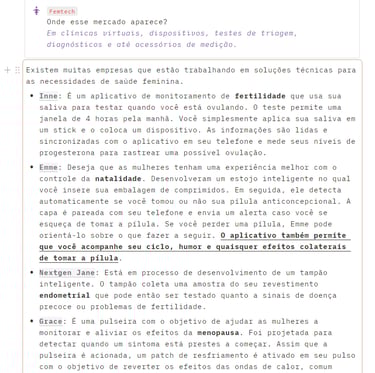
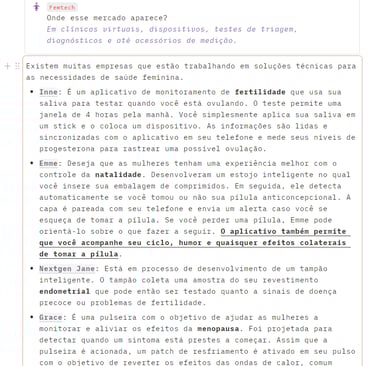
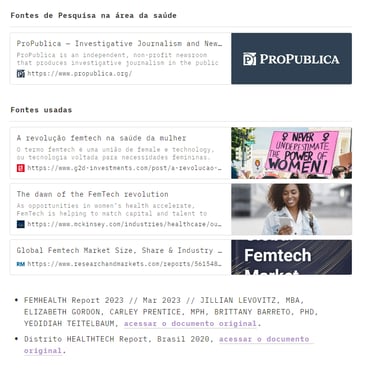
The Healthcare Market
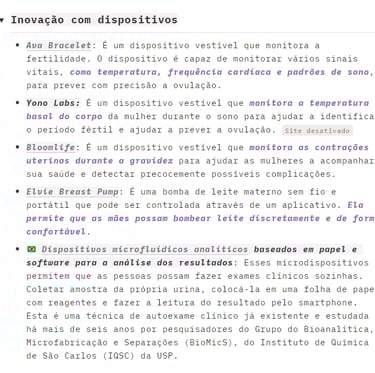
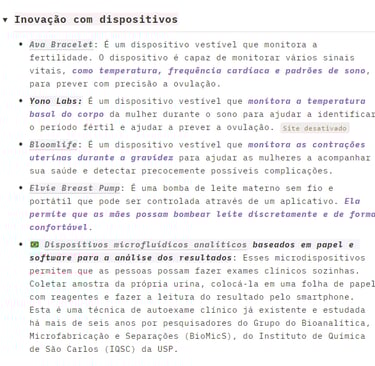
We started by researching health tech companies, direct and indirect competitors, and emerging innovations — from telemedicine to AI-assisted diagnostics. This helped us identify gaps in existing solutions and build a solid foundation for the design decisions ahead.
The Current Product
With a good notion of the healthcare market and knowledge of existing practices among competitors, we turned our attention to the client to understand their current state: what were the product and services offered, and how they were serving (or not serving) their customers and users.
We created specific questionnaires to interview patients, employees, and doctors, and visited one of the client's facilities. Afterward, we transcribed the interviews and analyzed the collected data, highlighting important information, presenting problems, and suggesting potential solutions.
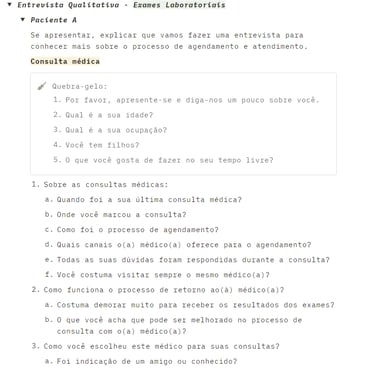
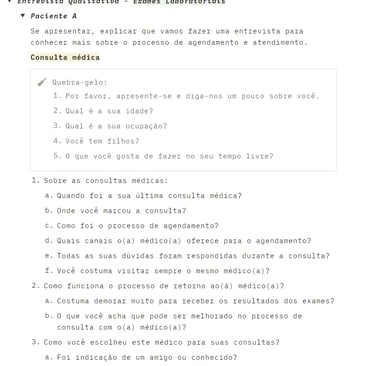
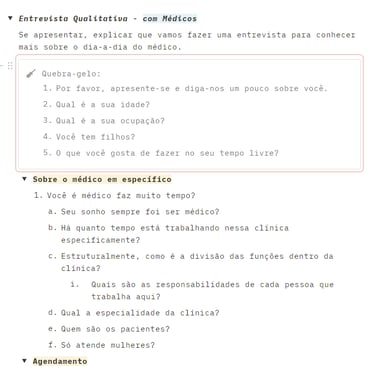
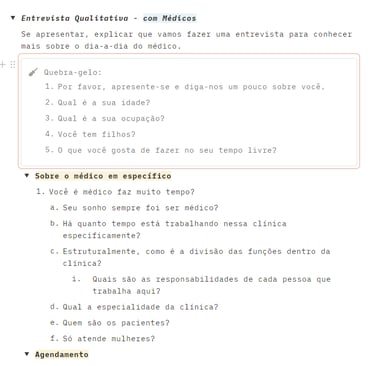
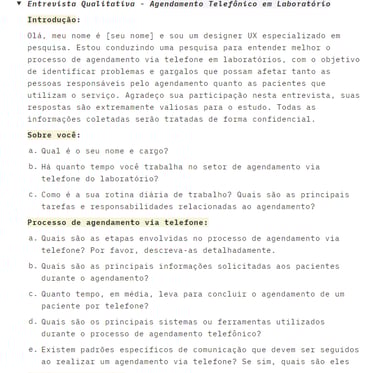
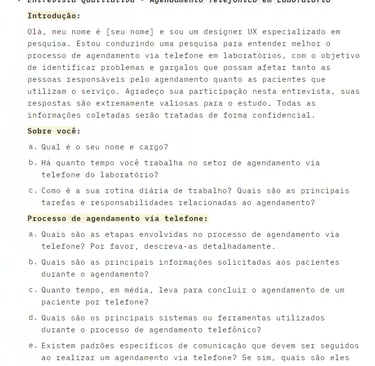
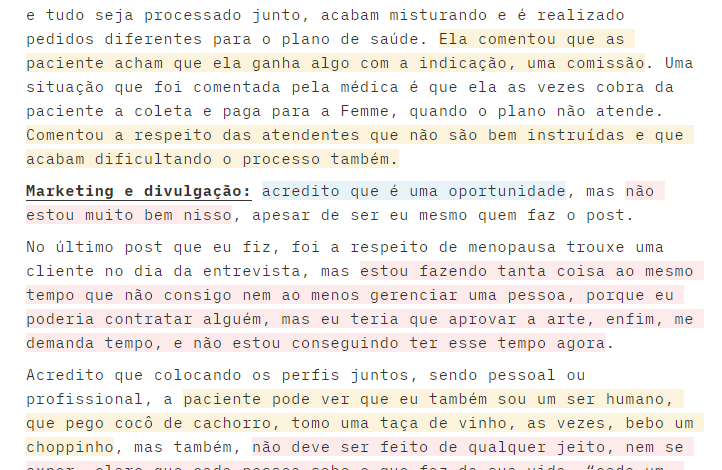
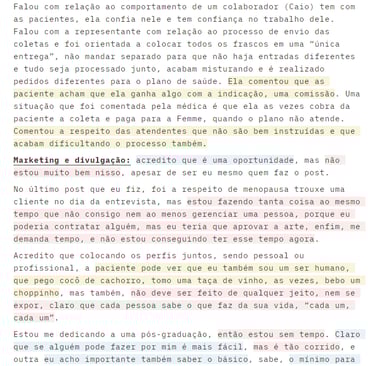
Interview responses coded by theme: problems, insights, and opportunities.
The Ideal Scenario
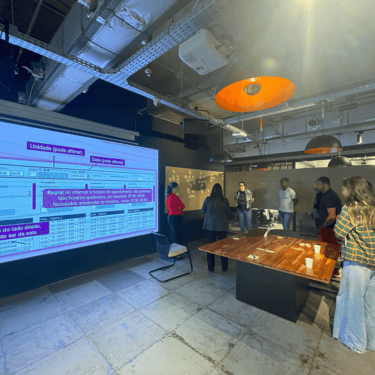
We organized two workshops: in the first one, we spoke with employees responsible for the appointment and exam result system, including the release of orders with health plans; in the second one, we gathered doctors and sales representatives to discuss the possibility of creating a medical record integrated into the patient's app, enabling a simplified appointment scheduling process directly from the doctor's office and providing direct and easy access to exam results and patients' health history.
The goal of the workshop was to create the complete experience, both from the user's perspective and the operational side, encouraging brainstorming without considering operational or technological constraints initially.
As we put all the ideas on the table (or rather, on the wall), our team, composed of designers and developers, helped participants break down their ideas, separating what was feasible in the initial stages from what we still lacked the technology, manpower, or budget to develop.
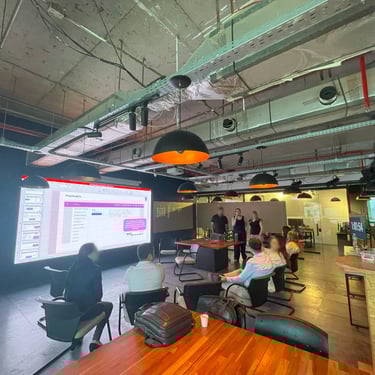
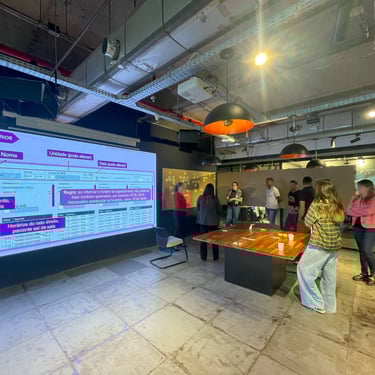
Data Analysis & Ideation
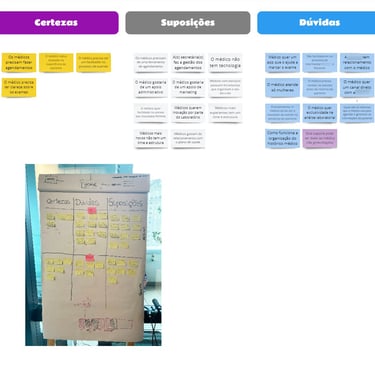
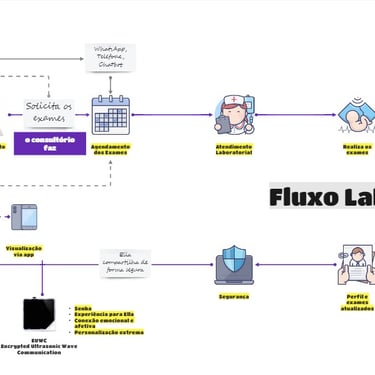
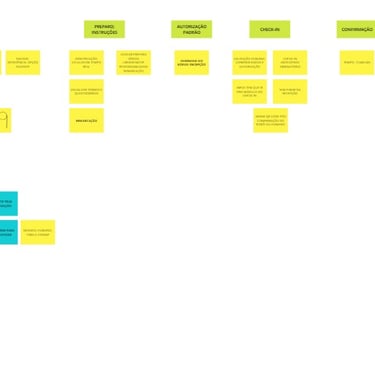
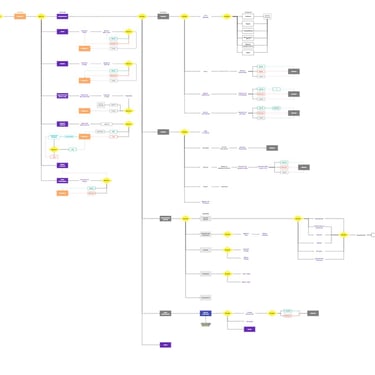
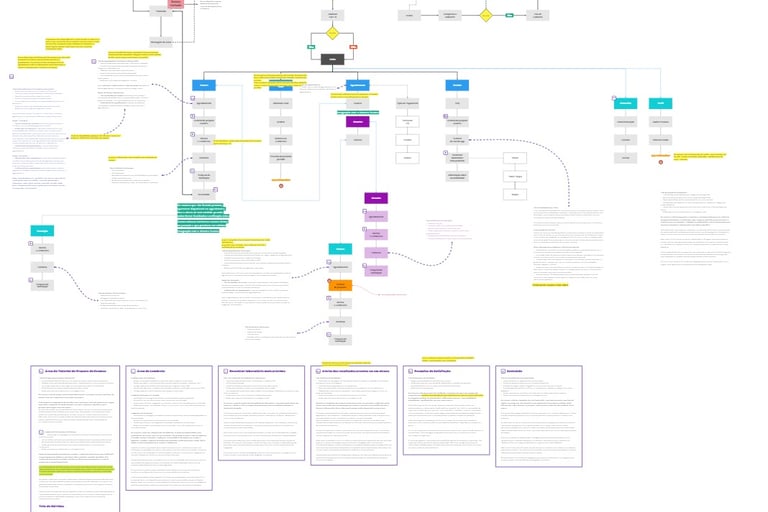
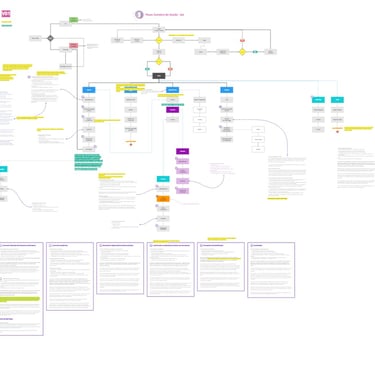
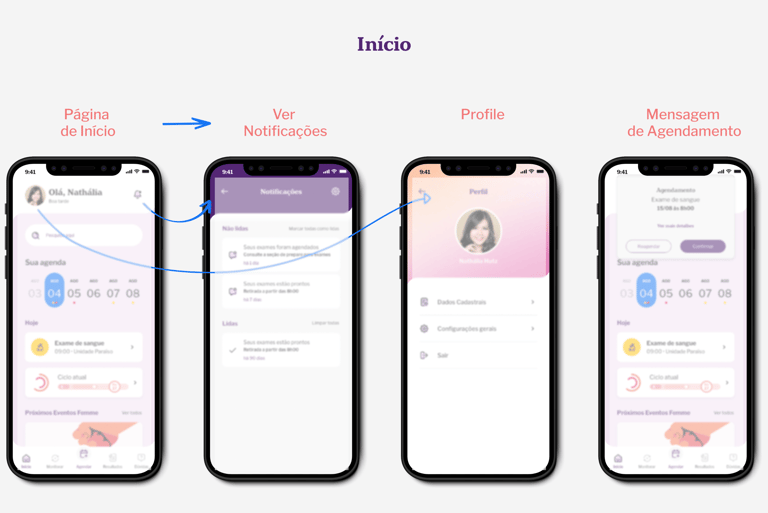
With research complete, we organized findings into assumptions, user flows, and journey maps to identify opportunities and define the solution structure.
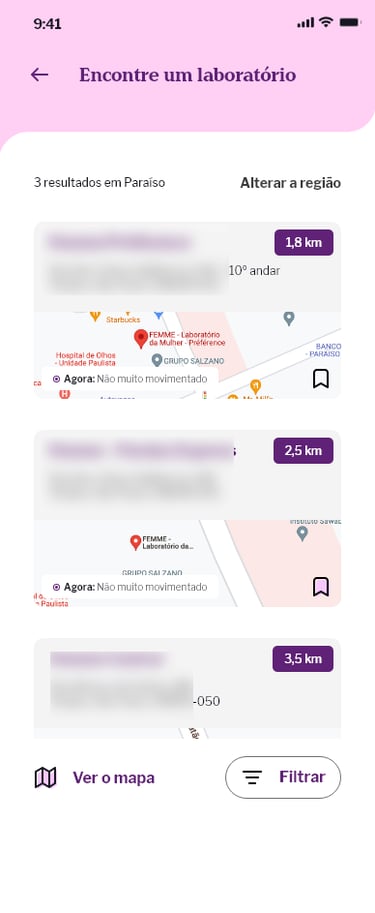
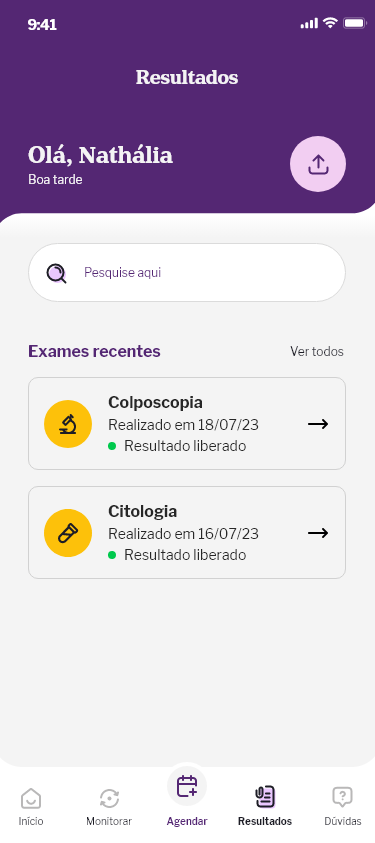
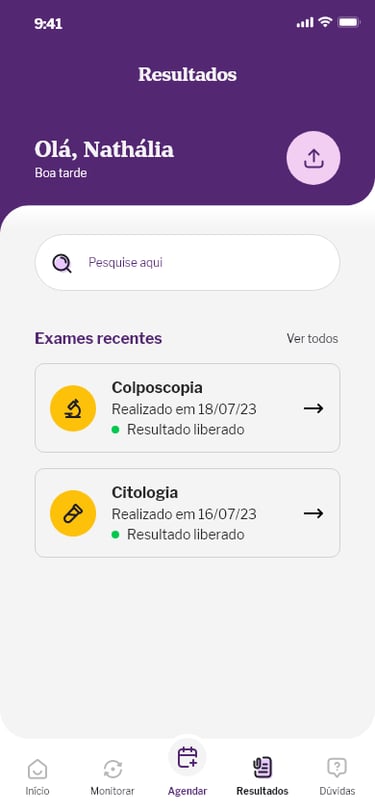
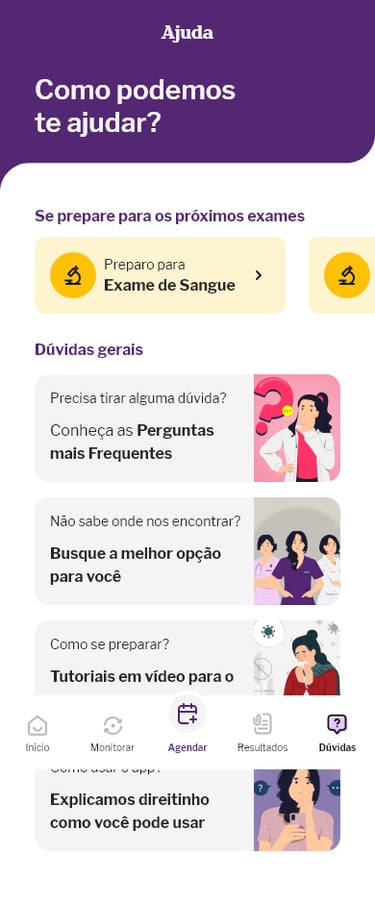
Prototype & Visual Design
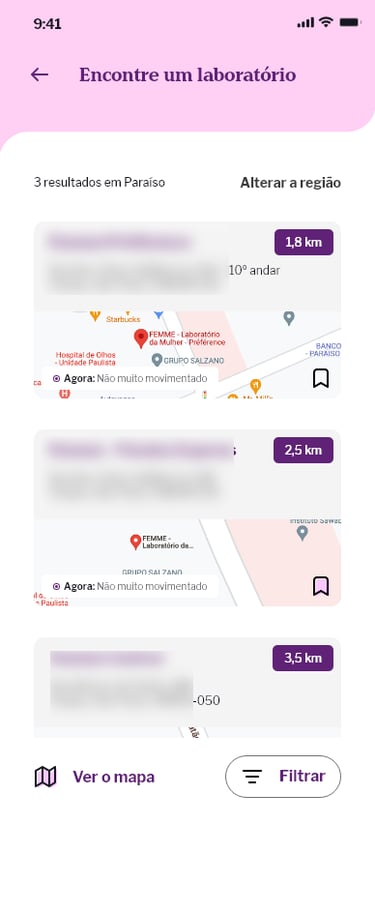
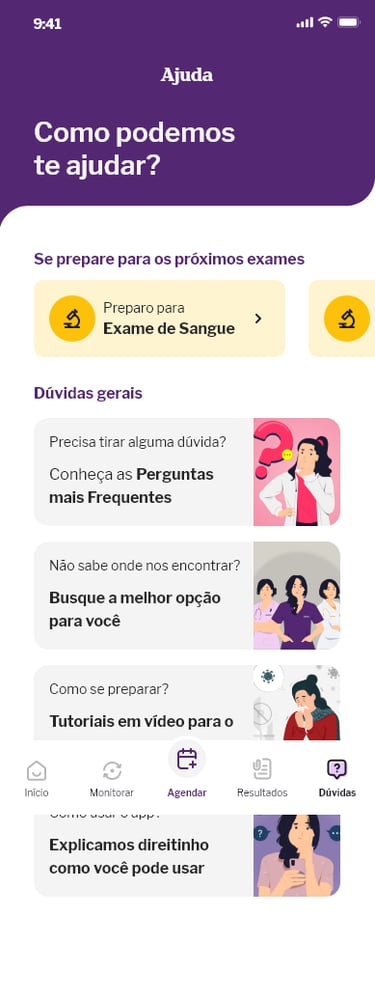
The client already had a well-established and recognized brand in the market, so visually, we followed their guidelines and adapted small details to fit the new interface.
Prototypes were used to validate the clarity of the scheduling flow and identify friction points in task progression.
Collaboration & Feasibility
Throughout the project, I worked closely with developers and stakeholders to ensure the proposed solutions were feasible within technical and business constraints.
Designs were delivered with clear documentation, covering flows, edge cases, and interaction details. This ensured the solution could be understood, evaluated, and implemented if needed, without ambiguity.
OUTCOMES & REFLECTIONS
Starting from an ideal scenario helped reveal the core challenges behind the existing scheduling workflow, allowing the team to focus on root problems rather than surface-level limitations.
Early alignment and collaboration with developers enabled more pragmatic design decisions by grounding proposed solutions in technical feasibility.
Direct collaboration with clinical staff was essential to defining clear success criteria and ensuring that design decisions reflected real operational needs.